[Orig to FB]
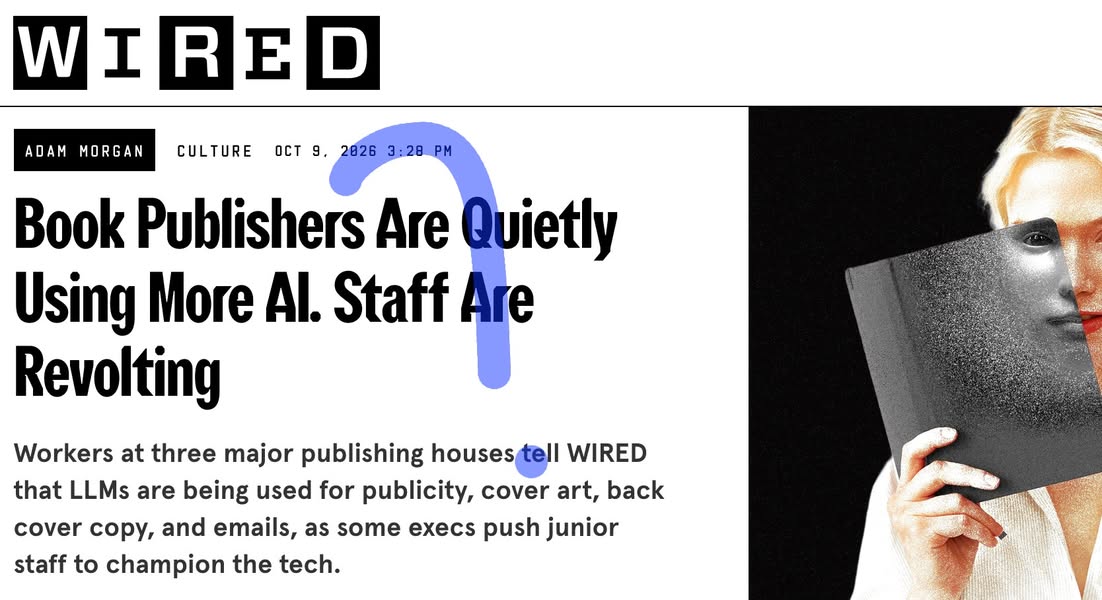
If you fetishize AI as somehow categorically different from other “technologies,” then (I mean, hypocrisies aside) this is Very Wrong. But if, instead, you see AI as consistent with a narrower technical lineage — which includes photocopiers, faxes, word processors (hardware and software), desktop publishing, OCR, print on demand are some of the most obvious ones — then (a) it makes sense, (b) is inevitable, and (c) will therefore be come to be seen as necessary and right. There are some layers of copy/sub-editing and even more so of proofreading that will be done better by AIs than by people, period (or “full stop,” as some would have it) — mainly the repetitive drudgery aspect. For now, that assumes the AI is used by someone with practical experience; but as AI providers learn from interaction, it’ll become trivial to bake those higher-order functions into the software itself. Either way, generic debates about this won’t make much sense if they ignore the overarching fact that there are different kinds of publishing, which will be affected differently. One kind privileges the pipeline so it imposes ever-growing strictures on “writing” (technical, academic, reference, etc) — this will get eaten up by AI. The other kind is more speculative and open (everything from chapbooks to ‘independent’ ventures of every kind; that stuff is so arbitrary that AI won’t be able to automate it anytime soon, but it will be able to ~simulate it. But one BIG problem that AI poses for publishing, as it does for so many other fields of activity, is that it’ll slam the door on entry-level work: in its desperate effort to make ends meet now (even if those ends are the demands of private equity), the industry will starve itself of new talent. And, of course, none of these defensive/reactive discussions ask one crucial question: what will the benefits be?